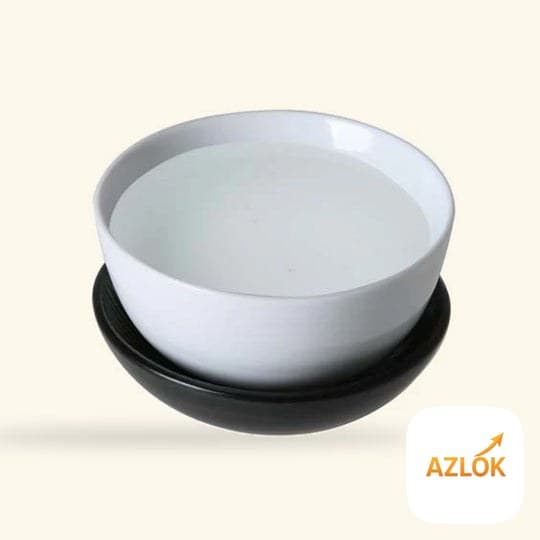

Vegetable glycerin is a clear, odourless, syrupy liquid used mainly as a humectant, meaning it draws moisture from the air into your skin and hair. Azlok's 99.7% food-safe grade (glycerol, CAS 56-81-5) is plant-derived from vegetable oils and works well in creams, soaps, toners, hair mists and many DIY formulations.
What is vegetable glycerin?
Chemically it is propane-1,2,3-triol (formula C3H8O3), also called glycerol or glycerine. It is produced from vegetable oils such as rapeseed, sunflower and soya through hydrolysis and fermentation. The result is a colourless, viscous, hygroscopic liquid with a high boiling point of around 290 °C and a faint-to-odourless smell. Because it mixes easily with water and many other ingredients, it is one of the most versatile raw materials in a home formulator's kit.
Common uses
- Skincare: Add to toners, face mists, serums and moisturisers as a hydrating agent that helps soften dry, cracked skin and support the skin barrier.
- Hair care: Use in leave-in sprays and conditioners to hydrate the scalp, reduce frizz and improve manageability.
- Soap and cleansers: Melt-and-pour soap bases and handmade bars use glycerin for a smoother, more moisturising feel.
- DIY and craft: It acts as a solvent and preservative helper in scrubs, masks and bath products.
- Food-grade projects: Being food safe, this grade is also used as a humectant in some kitchen and confectionery applications.
How to use it
Glycerin is potent, so a little goes a long way. In most leave-on skincare, a concentration of around 3–5% of the total recipe is plenty; going too high can leave a sticky feel and, in very dry weather, actually pull moisture from your skin.
- Simple hydrating toner: Mix roughly 1 teaspoon glycerin into 100 ml of rose water or distilled water. Shake before each use.
- Face or hair mist: Combine a small amount of glycerin with water and a preservative suitable for water-based products.
- Creams and lotions: Add glycerin to the water phase before emulsifying with your oils.
Because glycerin is water-loving, it will not dissolve in plain oils on its own — pair it with water or an emulsifier.
Tips and safety notes
- Always patch-test a new formulation on your inner arm before applying to the face.
- Dilute glycerin in water; applying it neat in very low-humidity conditions can feel drying rather than hydrating.
- Any water-based recipe you make at home should include a suitable preservative, as water invites microbial growth.
- Keep out of reach of children. While this grade is food safe, treat DIY cosmetic mixes as external-use products unless a recipe is specifically formulated for consumption.
- Store away from strong oxidisers and open flame; the flash point is around 160 °C.
Buying and storage
Azlok offers this vegetable glycerin from ₹449 in pack sizes of 1 KG, 5 KG, 10 KG, 20 KG and 25 KG, so it suits both hobbyists and small businesses. The shelf life is about 24 months when stored correctly.
- Keep the container tightly closed — glycerin is hygroscopic and will absorb moisture from the air.
- Store in a cool, dry place away from direct sunlight.
- Use clean, dry utensils each time to avoid contamination.
- Ask for the COA and MSDS if you need documentation for commercial formulating.
FAQ
Is vegetable glycerin the same as glycerol?
Yes. Glycerin, glycerine, glycerol and propane-1,2,3-triol all refer to the same compound (INCI name: Glycerin). Vegetable glycerin simply means it is derived from plant oils.
Can I apply glycerin directly on my skin?
It is best diluted in water or a rose water base. Neat glycerin is very thick and sticky, and in dry conditions it can draw moisture out of the skin rather than into it. A diluted mix is gentler and more effective.
Is this grade safe to use in food?
This is a 99.7% food-safe grade suitable for food and cosmetic applications. For any edible use, follow standard food-handling hygiene and use only recipes formulated for consumption.
Why does my glycerin toner feel sticky?
You are probably using too much. Reduce the glycerin to around 3–5% of the recipe, or dilute your mix further with more water or hydrosol.
How long does it last once opened?
Pure glycerin has a shelf life of about 24 months if kept tightly sealed in a cool, dry place. Finished water-based products you make from it will have a much shorter life and need a preservative.