

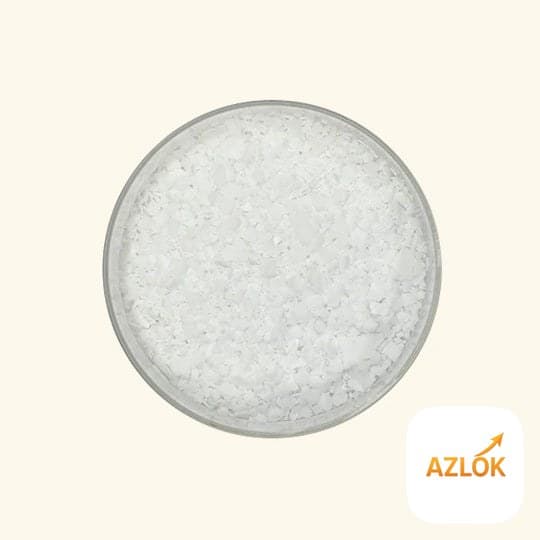

Myristic Acid
Minimum Order: 1 units
Description
Myristic Acid (C14H28O2, CAS 544-63-8) is a white powder fatty acid derived from vegetable oils such as coconut and palm oil. It functions as a surfactant, emulsifier, and thickener in soaps, shampoos, lotions, and skincare formulations. Available at Azlok in packs from 100 g to 20 kg, 99% purity, industrial grade.
History & Discovery
Myristic acid takes its name from Myristica fragrans, the nutmeg plant, where it was first identified in the 19th century. It is, however, far more abundant in coconut oil and palm kernel oil, which form the commercial basis for its production. The compound is a naturally occurring saturated fatty acid found in many animal and vegetable fats, and it has been used in soap-making traditions for generations because of the stable, creamy lather it produces. Industrial-scale production from tropical vegetable oils became common in the 20th century, making it a staple ingredient for cosmetic and personal care manufacturers worldwide.
Scientific & Medicinal Importance
Myristic acid is a 14-carbon saturated fatty acid with the molecular formula C14H28O2, IUPAC name tetradecanoic acid, and CAS number 544-63-8. It is manufactured by fractional distillation of mixed methyl esters derived from vegetable oils such as coconut and palm oil, yielding a white crystalline powder with a boiling point of 326.2 °C and a flash point of 110 °C. Its molecular weight is 228.37 g/mol. In cosmetic formulations, myristic acid acts as a surfactant by reducing surface tension between water and oils, enabling cleansing and emulsification. It contributes to the hardness and lather quality of bar soaps and increases the viscosity of liquid formulations. It also acts as an emollient, helping to soften and condition skin and hair by forming a light occlusive layer.
Modern-Day Applications & Benefits
Myristic acid is widely used today by cosmetic formulators, soap makers, and personal care product manufacturers. In bar soaps, it provides a dense, stable lather and contributes to bar hardness. In shampoos and conditioners, it acts as a conditioning agent and foam booster. In lotions and creams, it serves as an emulsifier and emollient. It is also used in shaving creams and gels for its skin-softening properties. DIY cosmetic makers and small businesses in India source myristic acid in small quantities (100 g–1 kg) for handmade soaps and skincare, while larger manufacturers use 5–20 kg packs. At Azlok, the product is available at 99% purity, industrial grade, with a shelf life of 24 months when stored in a cool, dry place away from direct sunlight.
Why Azlok's Version is Trusted Today
Azlok
Frequently asked questions
What is myristic acid used for in cosmetics?
Myristic acid is used as a surfactant, emulsifier, thickener, and emollient in soaps, shampoos, conditioners, lotions, and shaving creams. It improves lather, foam stability, and skin-feel in formulations.
Is myristic acid safe to use on skin?
Myristic acid is generally considered safe for cosmetic use and is approved under INCI nomenclature. However, conduct a patch test before use in leave-on products, and avoid direct contact with eyes. It is not intended for ingestion. Keep out of reach of children.
How is myristic acid manufactured?
It is produced by fractional distillation of mixed methyl esters obtained from vegetable oils such as coconut oil and palm oil. This process separates the C14 fatty acid fraction to give a high-purity (99%) white crystalline powder.
What is the shelf life and storage requirement for myristic acid?
Myristic acid has a shelf life of 24 months. Store it in a cool, dry place away from direct sunlight and moisture, in a tightly sealed container. Avoid storing near heat sources, as its flash point is 110 °C.
Can myristic acid be used in cold process soap making?
Yes. Myristic acid is commonly used in cold process and hot process soap making. It contributes to bar hardness and produces a dense, stable lather. It is typically used at 5–20% of the total oil/fatty acid weight in a soap formula.
Specifications
Documents
Safety data sheet not yet published for this product — request one below and we will email it.
How to use Myristic Acid
Guides covering uses, dilution, safety and storage.